On a chilly Thursday afternoon in East Dallas, gunfire shattered the post-school calm at Willis C. Winters Park, a leafy green space with trails and open fields directly across from Woodrow Wilson High School.
Around 3:45 p.m. on January 22, 2026, emergency calls flooded in reporting a shooting in the parking lot along the 100 block of South Glasgow Drive, near the Santa Fe Trail—a spot where students often gathered after classes to unwind or head home. Dallas Police and Fire-Rescue rushed to the scene, finding an 18-year-old gravely wounded beside a black vehicle, amid scattered evidence markers and a growing perimeter of crime scene tape.
Three Woodrow Wilson High School students were involved in the incident, with reports indicating they had been handling or playing with a firearm in the park’s parking lot when it suddenly discharged. The shot struck senior Wornan Padilla Garcia, who was rushed by ambulance to a nearby hospital in a frantic bid to save him.
Despite medical efforts, he was pronounced dead shortly after arrival, turning what witnesses described as a momentary lapse into an irreversible tragedy in this familiar neighborhood hangout surrounded by homes, trails, and the school’s athletic fields.
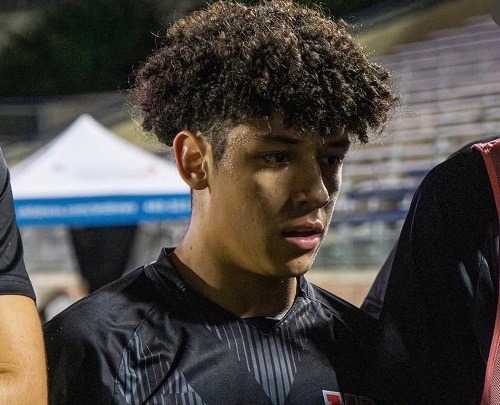
Wornan, an 18-year-old striker and winger wearing jersey number 21 on the Woodrow soccer team, had moved from Mexico and quickly endeared himself to classmates with his relentless positivity. Known for overcoming language barriers while encouraging teammates in English, he was the player who cheered loudest from the sidelines, maintained a great attitude even in defeat, and always checked on others’ well-being.
Friends and teammates mourned him as a “beautiful soul” and “the best of everyone,” someone who harbored no rivalries and was never seen angry, even during intense games. At a rainy vigil the next evening in the same parking lot, dozens gathered around flickering prayer candles, bouquets of flowers, and silver balloons marked with his number 21—one raised high when it began to droop, a small act symbolizing the community’s refusal to let his spirit fall.
The shooting prompted an immediate lockdown at Woodrow Wilson High School, with hundreds of students sheltered in place as police swarmed the adjacent park, visible from classroom windows and causing waves of anxiety among parents receiving urgent texts from inside.
Nearby J.L. Long Middle School continued normal dismissals, but Woodrow remained secured until just before 5 p.m., when students were funneled away from the scene. Dallas ISD deployed counselors and a crisis team, while announcing extra patrols for the following day, acknowledging the profound shock rippling through a campus unaccustomed to such violence in its doorstep.
A 16-year-old fellow student was taken into custody at the scene and charged with murder, though details on the exact sequence—whether the gun was being shown off or mishandled, remain part of an ongoing Dallas Police investigation, with the juvenile’s identity protected.
What began as an after-school moment among friends in the parking lot of Willis C. Winters Park, a rebranded community oasis honoring a former park director, ended in senseless loss, prompting reflections on gun access and safety as the East Dallas neighborhood grieved a promising life extinguished far too soon.